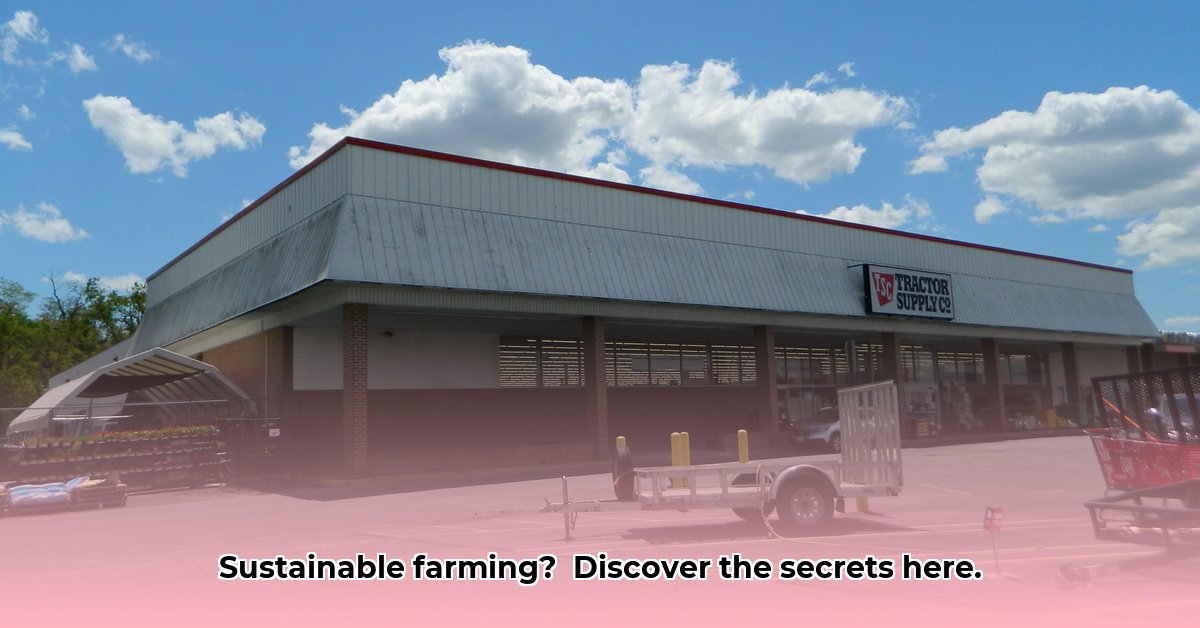
Tractor Supply Blairstown: Your Partner in Sustainable Agriculture
Embarking on a sustainable farming journey can feel overwhelming. But what if your local Tractor Supply (TSC) in Blairstown could significantly ease the transition? While not solely focused on sustainable products, TSC offers a surprising array of resources to support eco-friendly farming practices. For water storage solutions, check out these water tanks. This guide will show you how to leverage TSC's offerings to create a thriving, environmentally conscious farm. We'll move beyond simply identifying sustainable products and delve into actionable strategies for integrating them into your operation.
Unlocking Sustainable Solutions at Tractor Supply Blairstown: A Practical Guide
Sustainable farming is achievable with a strategic approach. Follow these steps to harness the power of TSC's resources and implement sustainable practices on your farm.
Step 1: Define Your Sustainability Goals: Before shopping, clearly articulate your objectives. Are you prioritizing water conservation, pesticide reduction, soil health improvement, or a combination? Specific goals will streamline your purchasing decisions. For example, if water conservation is paramount, focus on products supporting efficient irrigation.
Step 2: Become a Label Detective: Don't overlook product labels. Look for certifications like "organic," "non-GMO," or "USDA Certified Biobased Product," indicating environmentally responsible production. Carefully examine ingredient lists for potential concerns. This diligent approach ensures you're making informed choices aligned with your goals.
Step 3: Leverage TSC Staff Expertise: Don't hesitate to interact with TSC employees. While their expertise might vary, they can provide valuable insights into product availability and features that align with your sustainable farming vision.
Step 4: Explore Beyond the Obvious: Think creatively! Sustainable solutions aren't always immediately apparent. Rain barrels for water harvesting, tools maximizing fuel efficiency, and organic pest control methods are all avenues to explore. This demonstrates a deep commitment to sustainability beyond purchasing certified products.
Step 5: Integrate Local Resources: While TSC is a valuable resource, consider supplementing your purchases with locally sourced products from farmers markets or community-supported agriculture (CSA) programs. Supporting local businesses strengthens your community while promoting sustainable practices.
A Balanced Perspective: The Strengths and Limitations of Tractor Supply
TSC offers considerable advantages but also presents limitations. Understanding both aspects is crucial for effective utilization.
| Feature | Pros | Cons |
|---|---|---|
| Product Selection | Wide range of products relevant to sustainable farming are available, offering convenience and accessibility. | Sustainability isn't always prominently featured; product labeling and eco-friendly certification can be inconsistent. |
| Pricing | Competitive pricing with regular sales and discounts makes sustainable options more accessible. | Some eco-friendly products may command higher prices than conventional alternatives. |
| Staff Expertise | Knowledgeable staff can assist with product selection, although their expertise on sustainable practices varies. | In-depth knowledge of sustainable agriculture methodologies might be limited at some locations. |
| Community Engagement | Indirect support of local sustainable initiatives through purchasing choices. | More active promotion of local sustainable farms and businesses could enhance TSC's impact. |
| Product Transparency | Information on product origin and environmental impact varies significantly across different brands. | Requires additional research to assess the full environmental footprint of specific products. |
Cultivating a Sustainable Future: Your Active Role
Tractor Supply Blairstown provides valuable resources for sustainable farming. However, you must play an active role. Informed decision-making, diligent label scrutiny, and continuous exploration are key to achieving your sustainability goals. Engage with TSC's staff, research products thoroughly, and stay updated on best practices to nurture your farm's long-term health and environmental responsibility.
Sourcing Sustainable Livestock Feed: A Comprehensive Guide
Sustainable livestock feed is essential for environmentally responsible farming practices. Using this guide, we can discuss sourcing strategies to minimize your environmental footprint and promote animal wellbeing.
Assessing Your Needs: Understanding Dietary Requirements
Before sourcing feed, understand your animals' nutritional needs. Different species require various feed components. Accurate assessment optimizes feeding efficiency, a cornerstone of sustainability. Consider factors like age, breed, and production stage to determine appropriate feed ratios. A veterinarian or animal nutritionist can provide expert guidance.
Strategic Sourcing: Local and Beyond
Implement these strategies to source sustainable livestock feed:
Maximize Local Forages: Growing your own hay or utilizing pastureland is the most sustainable option, lowering transportation emissions and supporting biodiversity. This cost-effective approach reduces your farm's reliance on external resources.
Partner with Local Suppliers: Connect with local grain mills and farms offering sustainably produced feed ingredients. Fostering relationships with local suppliers strengthens your community and reduces your carbon footprint.
Supplement Strategically: If supplementing is necessary, prioritize responsible suppliers committed to sustainable practices and certifications such as organic or non-GMO.
Explore Alternative Feed Sources: Consider incorporating food waste (safely) or exploring insect-based protein products that boast a smaller environmental impact than traditional options.
A Practical Approach: Step-by-Step Implementation
- Needs Assessment: Thoroughly assess your animals' dietary needs and your farm's capacity for feed production.
- Resource Inventory: Evaluate available pasture land, storage capacity, and existing feed sources.
- Supplier Identification: Identify local forage options and responsible feed suppliers committed to sustainable practices.
- Supplementing: Determine supplemental feed requirements and identify appropriate sources.
- Performance Monitoring: Track feed consumption, animal health, and production efficiency to refine your feeding strategy.
By implementing these actionable steps, you contribute to a more sustainable and resilient farming system, benefiting both your animals and the environment. The long-term benefits include enhanced animal welfare, reduced environmental impact, and improved farm profitability.